Fr. James Boric’s Homilies and Talks
It is my hope that the homilies and talks in this space will help you know and love Jesus Christ and his Bride, the Catholic Church, better.
Listen on:

Episodes
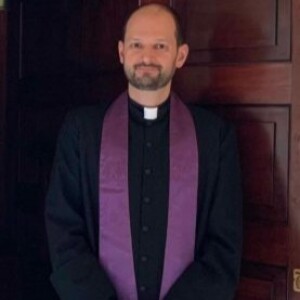
Jul 8, 2026

Jul 7, 2026
Jul 7, 2026
4 min
A Letter to my parish about SSPX -- written on August 30, 2023
Dear Friends,
Several people who attend the Traditional Latin Mass have asked me about the SSPX—specifically whether or not it is “OK” to attend one of their Masses. I have taken a considerable amount of time to research and answer that question. But before I do, let me say this:
I will always, always venture to give you the truth in accord with the Holy Catholic Church. But if I ever say anything that isn’t totally correct (through a mistake or a misunderstanding on my end), I always submit to the Church. Always. And I ask you to follow the Church in all things. The Church and Christ are one.
Ok…onto the SSPX…or officially, the Priestly Fraternity of St. Pius 10th. As you well know, they only offer the Mass in the Old Rite. They do not offer the Novus Ordo Mass.
To know whether or not it is “OK” to attend an SSPX Mass, we have to understand a little history. And we have to understand a principle which will guide us in making a morally good decision.
The Principle is this: for any human action to be morally good, three things must be good: the object, the act and the intent. If any one of the three is NOT good, we cannot proceed with the intended act.
I will apply this principle to the act of attending an SSPX Mass in a moment. But let’s start with a little history.
The Priestly Fraternity of St. Pius 10th was founded by Archbishop Marcel Lefevre as a pious union with the intent of preserving tradition in the Catholic Church prior to the Second Vatican Council.
In the wake of the Second Vatican Council there were clear abuses—in which the “false spirit” of the Council often overshadowed the actual directives of the Council—a council which, in itself, was guided by the Holy Sprit in an infallible way (as is true for all validly convened Ecumenical Councils). But many who were tasked to implement the council did so in ways that countered the very truth of the Council. This cannot be disputed. So…
Archbishop Lefevre’s idea to have an institution to maintain the Mass as it was before the Council seemed like a worthy idea.
The Church allowed the Society to move forward for 6 years – as an experiment. This experiment began in 1970.
By 1974 an apostolic visitation was made to the SSPX seminary because Archbishop Lefevre publicly questioned the legitimacy of the Second Vatican Council—and not just false thinking attributed to the council, but the Council itself. Finding this to be true, the Vatican recommended the Society be suppressed, and the Pope agreed. The Society was spreading a false doctrine and this had to be stopped.
One clear mark of true holiness is obedience. Lefevre was disobedient.
Despite the Vatican’s clear ruling, Archbishop Lefevre ordained new priests without the authority to do so. He thus incurred an automatic suspension—as did all of the newly ordained priests. While the sacrament of Holy Orders was valid (meaning these men were and are actually priests), it was highly illicit – meaning it was done outside of the Law of the Church that Jesus established and to which He gave the Keys of the Kingdom. This act of disobedience was just the tip of the iceberg for what was to come.
In 1988 St. John Paul II assigned Cardinal Ratzinger to work with Archbishop Lefevre to bring the Society into communion with the Church. The Holy Father wanted to lift all suspensions of the priests and to give the Society a canonical status in the Church so that they could have a legitimate and lawful priestly ministry which would allow them to legally celebrate the TLM. On May 5, 1988 Archbishop Lefevre signed an agreement that would have accomplished all of this. But the following day, he reneged on the agreement (which accepted the authority of the Pope and the Council). And what’s worse, after reneging, he consecrated 4 bishops without the permission of the Holy See. This defiant act not only directly violated Church law, but it meant that both Archbishop Lefevre and all the new bishops were automatically excommunicated.
Sadly, Archbishop Lefevre died in that state of ex-communication.
Let’s pause here for a second…
It is never a good idea to follow a leader//to worship under a leader who is disobedient and dies in a state of excommunication. This is a basic principle which is obvious but worth pointing out. As Catholics seeking heaven, we must first of all be obedient to Holy Mother Church, which is the Mystical Bride of Jesus Christ Himself. We must worship under her guidance. She is infallible. Individuals are not—no matter their external trappings.
Ok, back to the history of the SSPX…
In 2008, the Superior General of the Society requested the removal of the excommunications for the 4 illicit bishops consecrated by Archbishop Lefevre. He told Pope Benedict 16 that the Society accepted the teachings of the Church, firmly believed in the primacy of Peter and in his prerogatives, and that their current situation (of excommunication) was causing them much suffering.
Pope Benedict, desiring healing, lifted the excommunications and said, “It is hoped that this step will be followed by the prompt attainment of full communion with the Church on the part of the whole Society of St. Pius X.” In other words, he lifted the excommunications as a goodwill gesture so that the Society would correct its doctrinal errors and come into the safety of the Church.
But it did not.
The core the doctrinal concerns persisted—namely the rejection of the Pope’s authority, the rejection of the authority of an Ecumenical Council as well as the Society’s understanding that the bishop’s authority comes from the people and not from God or from the mandate given by the Church. Let me explain this error in brief…
Archbishop Lefevre failed to admit that the authority of any bishop comes by the grace of God and the favor of the Holy See. He said that his jurisdiction as a bishop came from the desire of the people—which is precisely what the Protestants and the Free Masons say as well! Any belief that that the people give jurisdiction to a bishop violates both Divine and Catholic faith. It is a heresy.
These errors still persist among the SSPX to this day.
And that the priests have faculties to hear confessions (a faculty which Pope Francis extended to the priests of the Society in the Year of Mercy) does not change their status. Even a laicized priest can hear a confession in the danger of death. This faculty was granted by the current Pope for the sake of the faithful—so that their sins could be forgiven. But it did not change anything regarding the legal status of the SSPX priests.
And since the Society still has no canonical (legal) status in the Church, no SSPX priest is allowed to exercise any ministry in the Catholic Church with the exception of hearing confessions and witnessing marriages. But even with marriages, they can only officiate at a wedding IF they receive faculties from their local Bishop. Short of this, the marriage is invalid.
Given all of this, let’s look at whether one can attend an SSPX Mass in good conscience. Let’s apply these facts to our principle which states that for a human action to be morally good, three things must be good: the object (the WHAT), the act (the HOW) and the Intent (the WHY).
The Object (the WHAT) in this case is a Mass officiated by an SSPX priest. Since the Society has no legal authority to offer the Mass in any location—per the Church—the Mass is not acceptable as they offer it.
The act of offering the Mass (the HOW) is illicit (meaning it is not a legal act and thus not in accord with right judgment).
And the intent of the SSPX priests and bishops in offering the mass is not in union with the Catholic Church—and thus is not a morally acceptable act of the will.
In other words, all three components: the Object, Act and Intent fall short of moral rectitude.
Given this, one could never say that it is morally acceptable to attend an SSPX Mass. Most orthodox canonists will say the only time it could be permissible to attend such a Mass is if there was no valid Catholic Mas (including the Novus Ordo) within 100 miles of where you are—and you simply cannot travel to the valid Mass.
Said differently, it is safe to say that we must never attend an SSPX Mass when we can attend a valid Novus Ordo Mass. The efficacy of the Mass does not come from the external trappings, but from the union of Christ with his Church—through the sacraments.
The Liturgy is, primarily, an act of God—not man. God works through his Church. Thus, for the salvation of souls, we must stay within the jurisdiction of the Catholic Church.
It is my hope that this helps all of us. I know I have had a lot of people over the years ask me to address this question. Some good friends of mine have family members who have left the Church to attend Mass at an SSPX chapel – and they didn’t know if they could attend or not.
It is also my hope that by teaching you, you can also help and teach others.
Jesus taught a lot. This was part of his salvific ministry. It is part of mine too.
May God bless you.
Fr. James Boric

Jul 4, 2026
Jul 4, 2026
10 min
250th Birthday of the United States and 200th Anniversary of the Laying of the Cornerstone at St. Mary's Catholic Church in downtown Hagerstown, MD
Jul 1, 2026
Jun 30, 2026

Jun 28, 2026
Jun 25, 2026

Jun 24, 2026
Jun 23, 2026

Jun 21, 2026
Jun 21, 2026
14 min
Fr. Alex Kulik First Mass Homily (Basilica of the Assumption, June 21, 2026)